Structure of the text

words,
group of words,
sentences,
texts
part of the team
Shortening the sentences
1. The famous scientist, after years of research, finally discovered a cure for the disease. The scientist discovered a cure.
2. The young student, despite being very tired, finished all of her homework. The student finished her homework.
3. The hungry dog suddenly chased the neighbor’s cat down the street. The dog chased the cat.
4. My older brother secretly bought a brand new bicycle for my birthday. My brother bought a bicycle.
5. The experienced chef carefully prepared a delicious three-course meal. The chef prepared a meal.
6. The excited children quickly built a huge sandcastle on the beach. The children built a sandcastle.
7. The patient teacher slowly explained the very difficult math problem. The teacher explained the problem. .
The brave astronaut successfully took hundreds of photos in space. The astronaut took photos. .
The curious girl eagerly read a fascinating book about ancient history. The girl read a book.
10. The skilled mechanic finally fixed the completely broken car engine. The mechanic fixed the engine.
1. The talented artist passionately painted a beautiful mountain landscape. The artist painted a landscape.
12. The exhausted football player somehow scored the winning goal in the last minute. The player scored a goal.
13. The innovative company proudly launched a revolutionary new product. The company launched a product.
14. The experienced doctor thoroughly examined the seriously ill patient. The doctor examined the patient.
15. The gifted musician emotionally played a wonderful song at the sold-out concert. The musician played a song.
Cohesion:
They did not want to continue with these practices.
She first got into printing when her brother opened a printing shop in the city nearby.
On the other hand, if you get a lot of the answers wrong on this pretest, don’t despair.
These words are defined and used in sample sentences.
Following these definitions, the words are practiced in three exercises.
Besides their wearability, either as jewelry or incorporated into articles of attire, beads possess the desirable characteristics of every collectible.
In addition to having to be ageneralist while specializing in what may seem to be a narrow field, the researcher isfaced with the problem of primary materials that have little or no documentation.
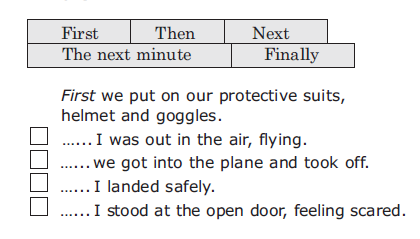
Next, the crossbill snakes its long tongue into the gap anddraws out the seed.
Moreover, the degree to which cones are naturally slightly open or tightly closed helps determine which bill design is thebest.
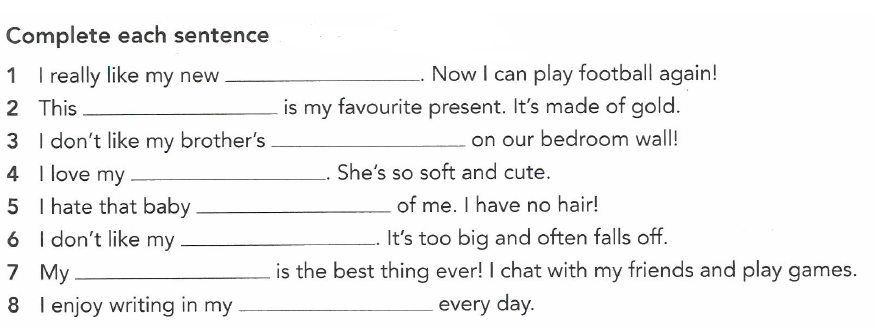
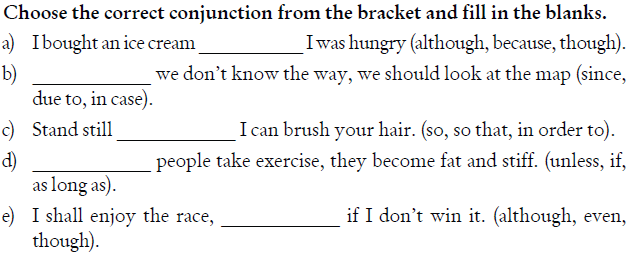
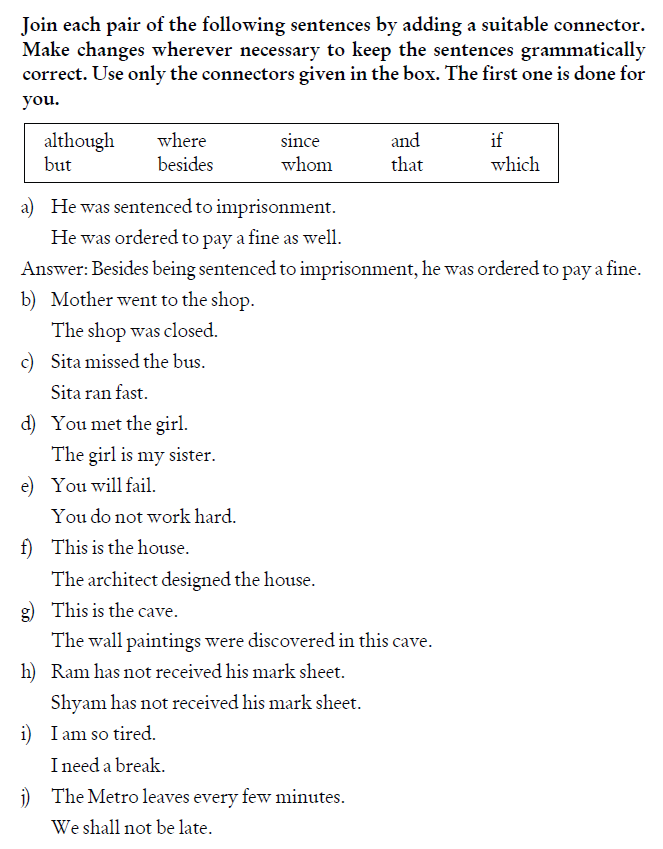
Not surprisingly, the Native Americans considered these precursors to today’s lacrosse excellent battle preparation for young warriors, and games were often used to settle disputes between tribes without resorting to full-blown warfare.
The 1820s and 1830s shared another linguistic fad with today: an appreciation for deliberate misspellings. (Kewl, rite?) This trend, which had humorists adopting now-cringey bumpkin personas with ignorance manifested in uneducated spellings, turned no go into know go and no use into know yuse (lol). Abbreviations were not immune, and no go became K.G.. So too all right became O.W., as an abbreviation for oll wright. And all correct became o.k., as an abbreviation for oll korrect.
The Aztecs taught the Spanish, the ones who conquered them, about cocoa. The Spanish were the first to add sugar, and hot chocolate became the rage of the Spanish court. 3TheAztecs enjoyed cocoa’s naturally bitter taste. Some health expert s now say that chocolate is a stimulant and should be avoided. Louis XIV of France became interested in chocolate when he married Maria Teresa of Spain. She is remarked to have presented him with chocolate as an engagement gift.
That discovery help people to live longer.
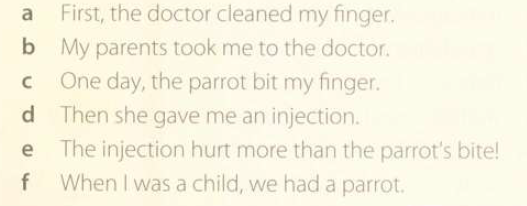
three sentences to put out
The Colosseum, an architectural building of ancient Rome, became a symbol of entertainment and impressiveness. The Colosseum was used to host gladiatorial shows as well as a variety of other events. The shows, called munera, were always given by private individuals rather than the state. They had a strong religious element but were also demonstrations of power and family prestige, and were immensely popular with the population. Another popular type of show was the animal hunt, or venatio. These captivating hunts not only showcased the exotic wildlife but also highlighted the hunting skills of the participants. This utilized a great variety of wild beasts, mainly imported from Africa and the Middle East, and included creatures such as rhinoceros, hippopotamuses, elephants, giraffes, aurochs, wisents, Barbary lions, panthers, leopards, bears, Caspian tigers, crocodiles and ostriches. Battles and hunts were often staged amid elaborate sets with movable trees and buildings. Such events were occasionally on a huge scale; Trajan is said to have celebrated his victories in Dacia in 107 with contests involving 11,000 animals and 10,000 gladiators over the course of 123 days. During lunch intervals, executions ad bestias would be staged. Those condemned to death would be sent into the arena, naked and unarmed, to face the beasts of death which would literally tear them to pieces. Other performances would also take place by acrobats and magicians, typically during the intervals. Magicians added to the thrill with mind-blowing tricks, providing a much-needed escape from the brutal reality.
four steps in the procedure
Upright wrestling was conducted in a jumping pit-style arena, a type of round or oval building with an open space with rising seats in the middle. The aim was for one of the wrestlers to throw his opponent on to the ground so that he landed on a place such as his hip, back, or shoulder. To land on one of these areas would suggest that one has been thrown into a prone position and is, therefore, at the mercy of one’s opponent. It is not unreasonable to assume , therefore, that this was counted as a well-executed throw and might score a “point” accordingly. If both wrestlers fell together then we must assume that either no point was scored or both scored. Either way, neither competitor gained an advantage. To gain victory, in competition at least, then it appears that one of the competitors had to amass three points or correct throws. It must have been a long and tiring contest.
3. The correct order is as follows:
3 Wrestler scores a point.
4 Wrestler wins game after amassing three points or three correct throws.
1 Wrestler enters a jumping pit-style arena.
2 Wrestler throws his opponent onto the ground.
rearange the paragraph
The difference between a liquid and a gas is obvious under the conditions of temperature and pressure commonly found at the surface of the Earth. A liquid can be kept in an open container and fills it to the level of a free surface. A gas forms no free surface but tends to diffuse throughout the space available; it must therefore be kept in a closed container or held by a gravitation field, as in the case of a planet's atmosphere. The distinction was a prominent feature of early theories describing the phases of matter. In the nineteenth century, for example. one theory maintained that a liquid could be "dissolved" in a vapor without losing its identity. and another theory held that the two phases are made up of different kinds of molecules: liquidons and gasons. The theories now prevailing take a quite different approach by emphasizing what liquids and gases have in common. They are both forms of matter that have no permanent structure, and they both flow readily. They are fluids
what is the next paragraph about
If the salinity of ocean waters is analyzed. it is found to vary only slightly from place to place. Nevertheless. some of these small changes are important. There are three basic processes that cause a change in oceanic salinity. One of these is the subtraction of water from the ocean by means of evaporation-conversion of liquid water to water vapor. In this manner. the salinity is increased. since the salts stay behind. If this is carried to the extreme. of course. white crystals of salt would be left behind: this. by the way. is how much of the table salt we use is actually obtained.
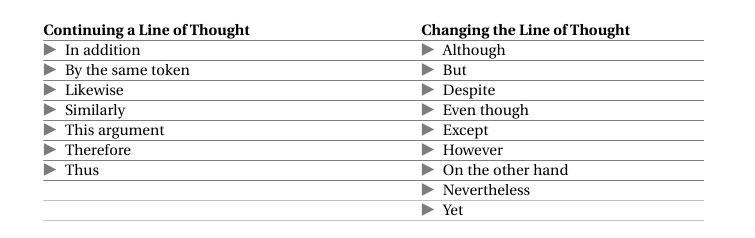
linking words
A common disability in test pilots is hearing impairment, a consequence of sitting too close to large jet engines for long periods of time. Therefore, it might be harder for ex-pilots to find a job after quitting this one but they still succeed nevertheless. For example, my neighbor John was a registered test pilot for over 10 years and now is a primary school teacher doing a great job and in no way at a disadvantage compared to others.
According to a recent study by Rutgers University, the number of women in state legislatures has grown in every election since 1968. After much debate, the number of slots dedicated to women as increased compared to the previous years but there still remain a lot of things to do. For example, there should a smaller wage discrepency between male and female employees. Therefore, the fight for woman rights should not stop here.
A fire in an enclosed space burns with the aid of reflected radiation that preheats the fuel, making ignition much easier and causing flames to spread more quickly. After burning down the building and turning it into ashes, the fire tends to be less powerful and could even extinguish itself on its own. But this method is rather long and dangerous compared to the intervention of firemen. Therefore, the arrival of firemen is crucial to dealing with a fire as they can also save the lives of many guests. For example, as in all the movies, there is always a friendly cop/fireman saving an innocent from a fire.
A recent New York Times editorial criticized the city’s election board for, first of all, failing to replace outmoded voting machines prone to breakdowns, and second, for failing to investigate allegations of corruption involving board members. After word spread out many citizens were worried about the discovery but still hoped it was just a media scandal as there were many before. For example, the previous year the town mayor and the town secretary were accused of stealing town funds when in reality there was no such proof as there was no missing money compared to the previous year. Therefore, false accusations come in all shapes and forms from even the most trustworthy sources.
A report by the American Academy for the Advancement of Science has concluded that many of the currently uncontrolled dioxins to which North Americans are exposed come from the incineration of wastes. Therefore, Americans should aim to improve their waste disposal and management techniques since they have one of the worst ones when compared to the rest of the world. For example, Puerto Rico is doing a good job as they recently implemented a new system of waste treatment which should showed positive effects after just 1 year of operation, but the question arises whether it would be sustainable in the long run.
Word swap
In these questions two words have been interchanged so that the first word has been moved to the place of the second and the second moved to the location of the first word. No other change to the sentence has occurred. It is your task to identify the two words that have been swapped. You should record your answer by writing the two words in the answer box. Be sure to record the words in the order that they occur in the question (ie, the incorrect order).
51. One is I like about Americans thing their friendliness.
52. Primates are monkeys that include lemurs, mammals, apes and humans.
53. Insects abound in most of the seemingly habitats even the world’s inhospitable.
54. Out of the 70 so or metals that exist on earth, iron is the most important.
55. An area is an island of land smaller than a continent that is surroundedby water.
56. Bound about the Alps to the north, the boot-shaped peninsula of mainland Italy stretches by 800km into the Mediterranean sea.
57. In the long fight for racial rights for black Americans Martin Luther King stands out for his great commitment to equal equality.
58. Almost half the 10 people speak the world’s most widespread languages.
59. Kites can be simple flat structures made from a complex of thin stickscovered with paper or more framework designs including data wingsand aerofoils.
60. Liquids are a form of shape with a definite volume but no fixed matter.
61. Laws regulate government and state, between relationship thegovernment and individuals and the conduct of individuals towardseach other.
62. Every object that is in the universe occupies a space and exists madeup of tiny particles.
63. Scientists use businesses to test their theories, engineers use it to designnew machines and entrepreneurs use it to manage their mathematics.
64. Eating to much or not having enough of the right food too eat leads to ill-health.
65. In 12 a single currency called the euro was adopted by 2002 European countries.
66. Britain industrial revolution began in The in the 18th century.
67. Billions of billions exist in the universe and each can contain galaxiesof stars.
68. The science of putting inventions and practice into discoveries iscalled technology.
69. Europe the second smallest has the continents of the third largestpopulation.
70. A volcano is a vent or fissure in the earth’s surface where from molten rock from the earth’s interior can erupt.
71. Lemon vinegar and juice are both acidic while toothpaste contains an alkali.
72. The temperature brings change in three main ways: pressure brings wind, weather brings cold or hot weather and moisture brings rain.
73. Medicine is the science of preventing or treating human that affect the disorders body and mind.
74. A microscope reveal small objects to magnifies details invisible to the naked eye.
75. Algebra involves substituting equations or symbols for unknown numbers and using letters that describe two equal statements.
76. We cannot see the salt in the ocean because it is in oceans but we knowit is there because the solution taste salty.
77. The Moon orbits the Earth’s and is almost a quarter of the Earth size and together they orbit the Sun.
78. Widespread help from parents and family members has always castdoubt on the value of grade in which home-completed assignmentscontribute to the examinations awarded.
79. Road congestion has forced many people to switch from public cars toprivate transport.Answer
80. Our solar system created nine planets and all were comprises from thedebris left over after the sun was formed.
81. We like to think of everyone as unique and for this reason do not likethe fact that 99.9 per cent of our DNA is common to ourselves.
82. It used to be thought that a diet high in fibre greatly reduces the risk ofcancer; are it is now thought that exercise and a balanced diet howeverthe best way to avoid the disease.
83. From space our world looks blue because its majority of the surface iscovered by the five great oceans.Answer84. Why go to university when there are plenty of good degree that donot need a careers and when qualifications equally valued by employers can be obtained at night school for a fraction of the cost?Answer85. Worldwide only a few thousand people are still believed to life a truly nomadic lead; most have been forced to adopt a life of subsistencefarming.Answer86. People assume that they go to hospital and get well to most do but there is also a real risk of acquiring a deadly infection.
87. A doctor will not normally disclose details of his patient’s health unless he believes the injuries resulted from gunshots or the condition represents a serious threat to public illness.
88. Climate is not the same as weather because the weather can change quickly while climate changes the likely weather conditions and describes over a much longer period of time.
89. Asia is the largest continent south from the Barring Sea to Europe and stretching to the many islands that make up Indonesia.
90. An object is coloured because light falls on it and only certain parts of the light spectrum are reflected; the rest looks absorbed by the object.
91. To monitor the annual inflation rate statisticians produce the price changes of a basket of over 650 goods and services.
92. The European of Britain is predicted to grow faster than any other population country and reach 65 million over the next 25 years.
93. The aerodynamics behind in a paper plane are as complex as the principalsinvolved any plane.Answer94. The colourful commemorative stamps printed in national post officeshave followers all over the world and by every strand of society.Answer95. Nuclear power generation is being industrialized because so manyreconsidered nations are failing to reduce the level of their carbonadmissions through energy efficiencies and renewable power.Answer96. Writing a will is something us all mean to do but it is something onlyone in three of we actually get around to doing.Answer97. Most government do not have a sufficient grasp of statistics to tellwhether or not the figures produced by their citizens are correct orbeing used correctly.Answer98. A popular theory about savings runs thus: young people borrow,elderly aged people save and middle people draw on their savings
99. The fear of being sued has changed day-to-day life to the point whereball outings are cancelled and school games are banned in parks.Answer100. They are more other efficient than alternatives such as paper andcardboard and 80 per cent of plastic bags are recycled as bin liners orare put to some energy reuse.
ORDER OF PARAGRAPHS IN THE PASSAGE
Agriculture, Iron, and the Bantu Peoples
1. There is evidence of agriculture in Africa prior to 3000 B.C. It may have developed independently, but many scholars believe that the spread of agriculture and iron throughout Africa linked it to the major centers of the Near East and Mediterranean world. The drying up of what is now the Sahara desert had pushed many peoples to the south into sub-Saharan Africa. These peoples settled at first in scattered hunting-and-gathering bands, although in some places near lakes and rivers, people who fished, with a more secure food supply, lived in larger population concentrations. Agriculture seems to have reached these people from the Near East, since the first domesticated crops were millets and sorghums whose origins are not African but West Asian. Once the idea of planting diffused, Africans began to develop their own crops, such as certain varieties of rice, and they demonstrated a continued receptiveness to new imports. The proposed areas of the domestication of African crops lie in a band that extends from Ethiopia across southern Sudan to West Africa. Subsequently, other crops, such as bananas, were introduced from Southeast Asia.
2. Livestock also came from outside Africa. Cattle were introduced from Asia, as probably were domestic sheep and goats. Horses were apparently introduced by the Hyksos invaders of Egypt (1780–1560 B.C.) and then spread across the Sudan to West Africa. Rock paintings in the Sahara indicate that horses and chariots were used to traverse the desert and that by 300–200 B.C., there were trade routes across the Sahara. Horses were adopted by peoples of the West African savannah, and later their powerful cavalry forces allowed them to carve out large empires. Finally, the camel was introduced around the first century A.D. This was an important innovation, because the camel’s ability to thrive in harsh desert conditions and to carry large loads cheaply made it an effective and efficient means of transportation. The camel transformed the desert from a barrier into a still difficult, but more accessible, route of trade and communication.
3. Iron came from West Asia, although its routes of diffusion were somewhat different than those of agriculture. Most of Africa presents a curious case in which societies moved directly from a technology of stone to iron without passing through the intermediate stage of copper or bronze metallurgy, although some early copper-working sites have been found in West Africa. Knowledge of iron making penetrated into the forests and savannahs of West Africa at roughly the same time that iron making was reaching Europe. Evidence of iron making has been found in Nigeria, Ghana, and Mali.
4. This technological shift caused profound changes in the complexity of African societies. Iron represented power. In West Africa the blacksmith who made tools and weapons had an important place in society, often with special religious powers and functions. Iron hoes, which made the land more productive, and iron weapons, which made the warrior more powerful, had symbolic meaning in a number of West African societies. Those who knew the secrets of making iron gained ritual and sometimes political power.
5. Unlike in the Americas, where metallurgy was a very late and limited development, Africans had iron from a relatively early date, developing ingenious furnaces to produce the high heat needed for production and to control the amount of air that reached the carbon and iron ore necessary for making iron. Much of Africa moved right into the Iron Age, taking the basic technology and adapting it to local conditions and resources.
6. The diffusion of agriculture and later of iron was accompanied by a great movement of people who may have carried these innovations. These people probably originated in eastern Nigeria. Their migration may have been set in motion by an increase in population caused by a movement of peoples fleeing the desiccation, or drying up, of the Sahara. They spoke a language, proto-Bantu (“bantu” means “the people”), which is the parent tongue of a large number of Bantu languages still spoken throughout sub-Saharan Africa. Why and how these people spread out into central and southern Africa remains a mystery, but archaeologists believe that their iron weapons allowed them to conquer their hunting-gathering opponents, who still used stone implements. Still, the process is uncertain, and peaceful migration—or simply rapid demographic growth—may have also caused the Bantu explosion.
Running Water on Mars?
1. Photographic evidence suggests that liquid water once existed in great quantity on the surface of Mars. Two types of flow features are seen: runoff channels and outflow channels. Runoff channels are found in the southern highlands. These flow features are extensive systems—sometimes hundreds of kilometers in total length— of interconnecting, twisting channels that seem to merge into larger, wider channels. They bear a strong resemblance to river systems on Earth, and geologists think that they are dried-up beds of long-gone rivers that once carried rainfall on Mars from the mountains down into the valleys. Runoff channels on Mars speak of a time 4 billion years ago (the age of the Martian highlands), when the atmosphere was thicker, the surface warmer, and liquid water widespread.
2. Outflow channels are probably relics of catastrophic flooding on Mars long ago. They appear only in equatorial regions and generally do not form extensive interconnected networks. Instead, they are probably the paths taken by huge volumes of water draining from the southern highlands into the northern plains. The onrushing water arising from these flash floods likely also formed the odd teardrop shaped “islands” (resembling the miniature versions seen in the wet sand of our beaches at low tide) that have been found on the plains close to the ends of the outflow channels. Judging from the width and depth of the channels, the flow rates must have been truly enormous—perhaps as much as a hundred times greater than the 105 tons per second carried by the great Amazon river. Flooding shaped the outflow channels approximately 3 billion years ago, about the same time as the northern volcanic plains formed.
3. Some scientists speculate that Mars may have enjoyed an extended early period during which rivers, lakes, and perhaps even oceans adorned its surface. A 2003 Mars Global Surveyor image shows what mission specialists think may be a delta—a fan-shaped network of channels and sediments where a river once flowed into a larger body of water, in this case a lake filling a crater in the southern highlands. Other researchers go even further, suggesting that the data provide evidence for large open expanses of water on the early Martian surface. A computer generated view of the Martian north polar region shows the extent of what may have been an ancient ocean covering much of the northern lowlands. The Hellas Basin, which measures some 3,000 kilometers across and has a floor that lies nearly 9 kilometers below the basin’s rim, is another candidate for an ancient Martian sea.
4. These ideas remain controversial. Proponents point to features such as the terraced “beaches” shown in one image, which could conceivably have been left behind as a lake or ocean evaporated and the shoreline receded. But detractors maintain that the terraces could also have been created by geological activity, perhaps related to the geologic forces that depressed the Northern Hemisphere far below the level of the south, in which case they have nothing whatever to do with Martian water. Furthermore, Mars Global Surveyor data released in 2003 seem to indicate that the Martian surface contains too few carbonate rock layers— layers containing compounds of carbon and oxygen—that should have been formed in abundance in an ancient ocean. Their absence supports the picture of a cold, dry Mars that never experienced the extended mild period required to form lakes and oceans. However, more recent data imply that at least some parts of the planet did in fact experience long periods in the past during which liquid water existed on the surface.
5. Aside from some small-scale gullies (channels) found since 2000, which are inconclusive, astronomers have no direct evidence for liquid water anywhere on the surface of Mars today, and the amount of water vapor in the Martian atmosphere is tiny. Yet even setting aside the unproven hints of ancient oceans, the extent of the outflow channels suggests that a huge total volume of water existed on Mars in the past. Where did all the water go? The answer may be that virtually all the water on Mars is now locked in the permafrost layer under the surface, with more contained in the planet’s polar caps.
Ancient Rome and Greece
1. There is a quality of cohesiveness about the Roman world that applied neither to Greece nor perhaps to any other civilization, ancient or modern. Like the stones of a Roman wall, which were held together both by the regularity of the design and by that peculiarly powerful Roman cement, so the various parts of the Roman realm were bonded into a massive, monolithic entity by physical, organizational, and psychological controls. The physical bonds included the network of military garrisons, which were stationed in every province, and the network of stone-built roads that linked the provinces with Rome. The organizational bonds were based on the common principles of law and administration and on the universal army of officials who enforced common standards of conduct. The psychological controls were built on fear and punishment—on the absolute certainty that anyone or anything that threatened the authority of Rome would be utterly destroyed.
2. The source of the Roman obsession with unity and cohesion may well have lain in the pattern of Rome’s early development. Whereas Greece had grown from scores of scattered cities, Rome grew from one single organism. While the Greek world had expanded along the Mediterranean Sea lanes, the Roman world was assembled by territorial conquest. Of course, the contrast is not quite so stark: in Alexander the Great the Greeks had found the greatest territorial conqueror of all time; and the Romans, once they moved outside Italy, did not fail to learn the lessons of sea power. Yet the essential difference is undeniable. The key to the Greek world lay in its high-powered ships; the key to Roman power lay in its marching legions. The Greeks were wedded to the sea; the Romans, to the land. The Greek was a sailor at heart; the Roman, a landsman.
3. Certainly, in trying to explain the Roman phenomenon, one would have to place great emphasis on this almost animal 48 instinct for the territorial imperative. Roman priorities lay in the organization, exploitation, and defense of their territory. In all probability it was the fertile plain of Latium, where the Latins who founded Rome originated, that created the habits and skills of landed settlement, landed property, landed economy, landed administration, and a land-based society. From this arose the Roman genius for military organization and orderly government. In turn, a deep attachment to the land, and to the stability which rural life engenders, fostered the Roman virtues: gravitas, a sense of responsibility, peitas, a sense of devotion to family and country, and iustitia, a sense of the natural order.
4. Modern attitudes to Roman civilization range from the infinitely impressed to the thoroughly disgusted. As always, there are the power worshippers, especially among historians, who are predisposed to admire whatever is strong, who feel more attracted to the might of Rome than to the subtlety of Greece. At the same time, there is a solid body of opinion that dislikes Rome. For many, Rome is at best the imitator and the continuator of Greece on a larger scale. Greek civilization had quality; Rome, mere quantity. Greece was original; Rome, derivative. Greece had style; Rome had money. Greece was the inventor; Rome, the research and development division. Such indeed was the opinion of some of the more intellectual Romans. “Had the Greeks held novelty in such disdain as we,” asked Horace in his Epistles, “what work of ancient date would now exist?”
5. Rome’s debt to Greece was enormous. The Romans adopted Greek religion and moral philosophy. In literature, Greek writers were consciously used as models by their Latin successors. It was absolutely accepted that an educated Roman should be fluent in Greek. In speculative philosophy and the sciences, the Romans made virtually no advance on early achievements.
6. Yet it would be wrong to suggest that Rome was somehow a junior partner in Greco Roman civilization. The Roman genius was projected into new spheres—especially into those of law, military organization, administration, and engineering. Moreover, the tensions that arose within the Roman state produced literary and artistic sensibilities of the highest order. It was no accident that many leading Roman soldiers and statesmen were writers of high caliber