Conclusions

What can be reasonably concluded from the text:
The laws in one state make it illegal for women to expose their ankles and for men to go without their guns.
Some studies suggest that physical activity may have other benefits as well.
Every work of art is the child of its age and, in many cases, the mother of our emotions.
It is sometimes said that a “good subject” for a short story should always be capable of being expanded into a novel.
What can be concluded about the material that is preceding the text:
The more obvious forms of public art include monuments, sculptures, fountains, murals, and gardens.
His observations, which he reported to the Royal Society of London, are among the first descriptions of living bacteria.
In the late 1600s, Leeuwenhoek, inspired by the magnifying lenses used by drapers to examine cloth, assembled some of the first microscopes.
Almost 50% of American teens are not vigorously active on a regular basis, contributing to a trend of sluggishness among Americans of al ages, according the U.S. Centers for Disease Control (CDC).
What could be reasonably concluded about the material that follows after this text:
Why does Reality TV get such a bad rap?
Why are these shows so popular today?
The shopping mall differs from its ancient counterparts in a number of important ways.
In the past thirty years, Americans’ consumption of restaurant and take-out food has doubled.
What can be reasonably concluded from the text:
The best way to attack the different sections of the test depends on both your own test-taking style and the test itself. Detailed strategies for each part of the test will be covered later in this book, but some basic points can be applied to the test as a whole.
Although all art is inherently public—created in order to convey an idea or emotion to others—“public art,” as opposed to art that is sequestered in museums and galleries, is art specifically designed for a public arena where the art will be encountered by people in their normal day-to-day activities.
Snake venom is one of the most effective methods of self-preservation in the animal kingdom. It is, essentially, toxic saliva composed of different enzymes that immobilizes prey. One type of toxin, known as a hemotoxin, targets the victim’s circulatory system and muscle tissue. The other is called a neurotoxin, and it affects the nervous system by causing heart failure or breathing difficulties.
Aristotle asserts that there are three reasons why we choose to be friends with someone: because he is virtuous, because he has something to offer to us, or because he is pleasant. When two people are equally virtuous, Aristotle classifies their friendship as perfect. When, however, there is a disparity between the two friends’ moral fiber; or when one friend is using the other for personal gain and or pleasure alone, Aristotle claims that the friendship is imperfect.
It is not surprising that Jessye loved to sing. Music was an integral part of her family's lifestyle. Although Jessye remembers her mother singing spirituals, it was her grandmother who was always singing. Every hour of her day and every mood was highlighted with a song that fit the occasion. As Jessye was growing up, her piano-playing mother and trumpet- and trombone-playing brothers accompanied her when the family was called upon to provide special music for church services, parent-teacher meetings, and ribbon-cutting ceremonies.
On the other hand, other laws aren't ever likely to be broken. For example, another law makes it illegal to tether one's horse to the fence surrounding the capitol building. It is hard to imagine anyone riding a horse into the city and leaving it tied outside of the capitol building today. One would have to go to great lengths in order to break this law.
The Señorita Ramona Gonzaga sailed for Monterey the same day and hour her lover sailed for San Blas. They stood on the decks waving signals to each other as one sailed away to the south, the other to the north. It was remembered afterward by those who were in the ship with the Señorita, that she ceased to wave her signals, and had turned her face away, long before her lover’s ship was out of sight. But the men of the San Jose said that Angus Phail stood immovable, gazing northward, till nightfall shut from his sight even the horizon line at which the Monterey ship had long before disappeared from view
What is really characteristic of all polytheism, however, is not the worship of idols or humanity or forests or stars; it is, rather, the worship of innumerable ~powers~ that confront and affect us. The powers are held to be valuable in themselves; that is why they are to be worshipped. But the values conflict. The gods do not cooperate, so you have to play them off against each other. Suppose you want rain. You know of two gods, the dry-god who sends drought and the wet-god who sends rain. You do not suppose that you can just pray to the wet-god to get busy, and simply ignore the dry-god. If you do so, the latter may be offended, so that no matter how hard the wet-god tries to oblige you, the dry-god will do his best to wither everything. Because both gods are powerful you must take both into consideration, begging the wet-god to be generous and beseeching the dry-god to stay his hand.
The Crescent College boys wear blazers and school scarves tossed around their necks and over their shoulders to show they’re cock o’ the walk. They have long hair which falls across their foreheads and over their eyes so that they can toss their quaffs like Englishmen. We know they’re the ones who will go to university, take over the family business, run the government, run the world. We’ll be the messenger boys on bicycles who deliver their groceries or we’ll go to England to work on the building sites. Our sisters will mind their children and scrub their floors unless they go off to England, too. We know that. We’re ashamed of the way we look and if boys from the rich schools pass remarks we’ll get into a fight and wind up with bloody noses or torn clothes. Our masters will have no patience with us and our fights because their sons go to the rich schools and, Ye have no right to raise your hands to a better class of people so ye don’t.
The worst and longest economic crisis in the modern industrial world, the Great Depression in the United States had devastating consequences for American society. At its worst (1932–1933), more than 16million people were unemployed, more than 5,000 banks had closed, and over 85,000 businesses had failed. Millions of Americans lost their jobs, their savings, and even their homes. The homeless built shacks for temporary shelter—these emerging shantytowns were nicknamed “Hoovervilles,” a bitter homage to President Herbert Hoover, who refused to give government assistance to the jobless. Farmers were hit especially hard. A severe drought coupled with the economic crisis ruined small farms throughout the Great Plains as productive farmland turned to dust and crop prices dropped by 50%. The effects of the American depression—severe unemployment rates and a sharp drop in the production and sales of goods—could also be felt abroad, where many European nations were still struggling to recover from World War I
One winter Pauline discovered she was pregnant. When she told Cholly, he surprised her by being pleased. [ . . . ] They eased back into a relationship more like the early days of their marriage, when he asked if she were tired or wanted him to bring her something from the store. In this state of ease, Pauline stopped doing day work and returned to her own housekeeping. But the loneliness in those two rooms had not gone away. When the winter sun hit the peeling green paint of the kitchen chairs, when the smoked hocks were boiling in the pot, when all she could hear was the truck delivering furniture downstairs, she thought about back home, about how she had been all alone most of the time then too, but this lonesomeness was different. Then she stopped staring at the green chairs, at the delivery truck; she went o the movies instead. There in the dark her memory was refreshed, and she succumbed to her earlier dreams. Along with the idea of romantic love, she was introduced to another—physical beauty. Probably the most destructive ideas in the history of human thought. Both originated in envy, thrived in insecurity, and ended in disillusion.
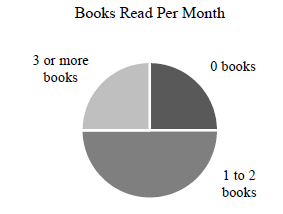
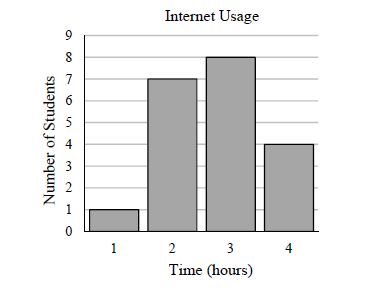
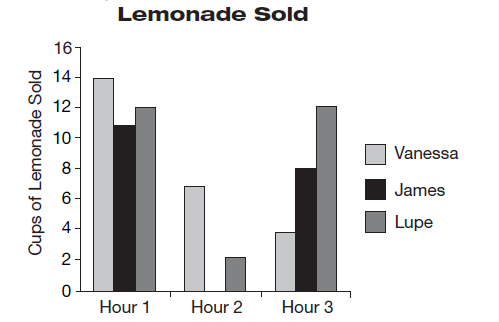
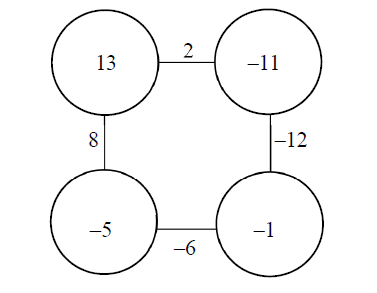
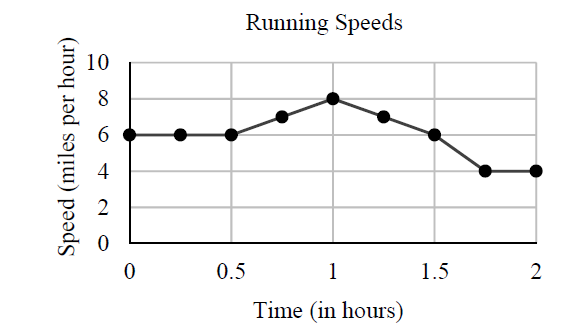
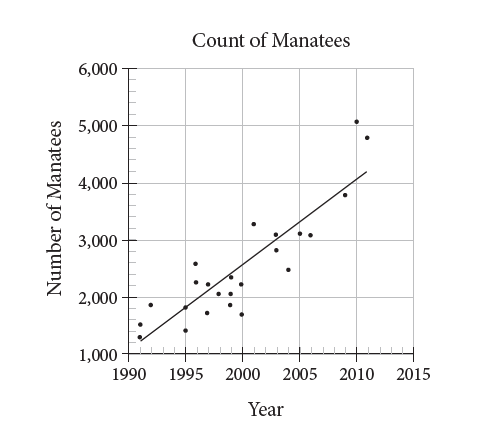
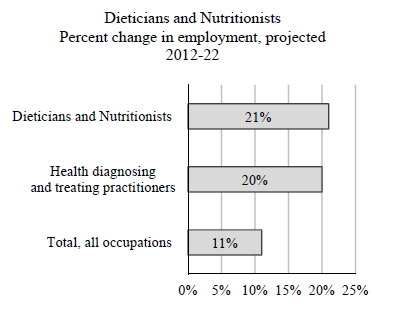
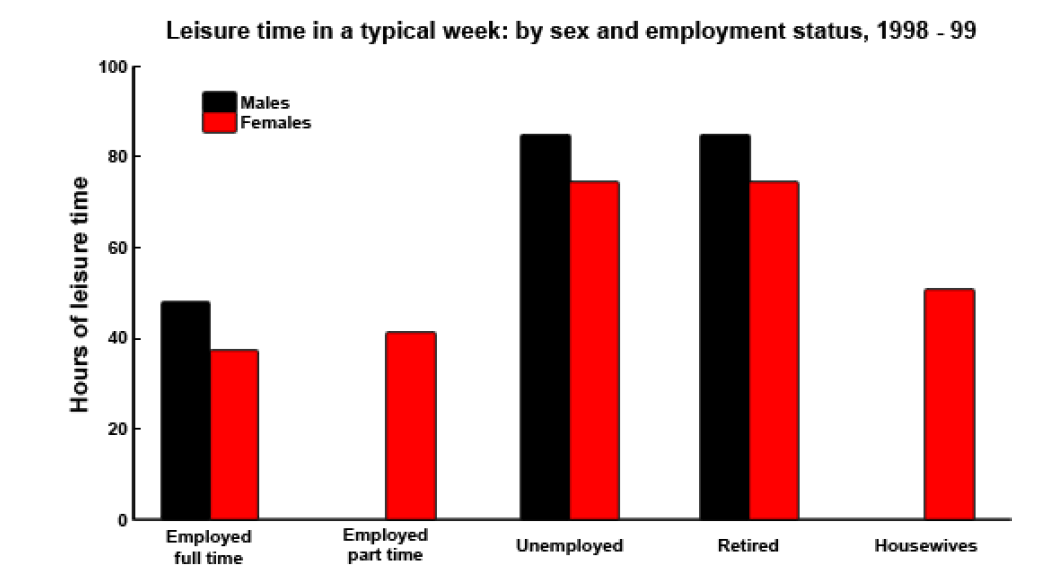
What can be reasonably concluded from the graph, diagram or table: